
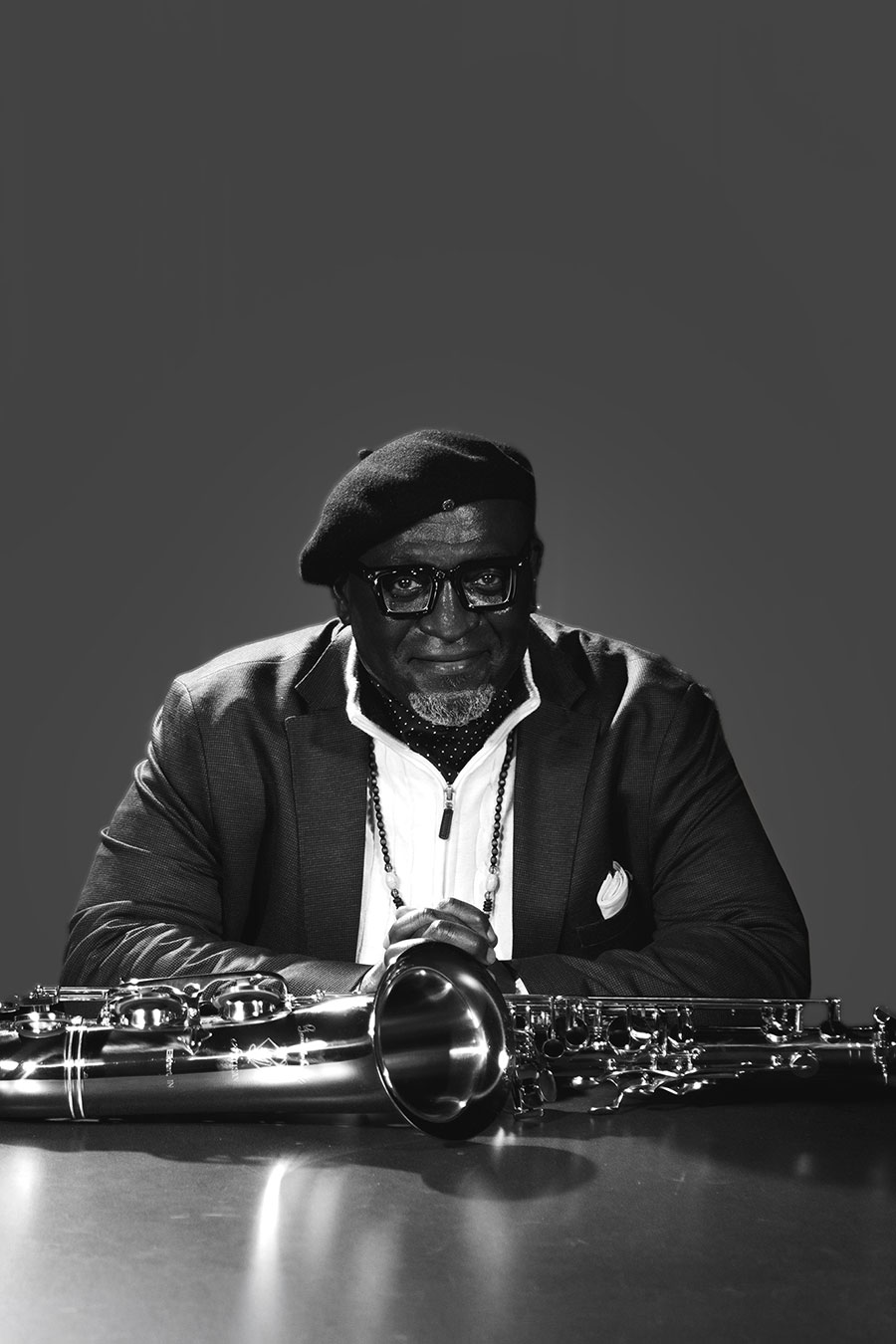
By El-Ra Adair Radney
When I inherited AAFS451 Jazz, Identity and the Human Spirit, I wanted it to become more than a listening appreciation course. I reimagined it around an original way of teaching that invites students to experience the profound influence of jazz’s revolutionary tradition.
I situate jazz within its proper historical, social, political and philosophical context. Most Americans don’t realize its unsung influence. The majority of hip-hop’s beats, arrangements, mixing and sampling come directly from jazz, yet those roots often go unrecognized. Composers, from George Gershwin to Maurice Ravel, found inspiration in jazz, creating a musical rapport that flowed between traditions.
This is why we continue to immortalize Duke Ellington. He was a composer extraordinaire who could connect these worlds through the genius, language and heritage of African American culture. Wynton Marsalis has carried that educational tradition forward, and in my own small professorial way, I hope to add something to that legacy by teaching not only the importance but also the love.
What fascinates me most about jazz is its intellectual, spiritual and philosophical dimensions.
The challenge for many people is that they think they already know jazz. They dismiss it before they have truly spent time with it. Jazz can elevate your consciousness, but it requires a kind of communion. You may need to come back to it several times before an epiphanous moment arrives — when you suddenly hear something extraordinary and think, “What is happening there?”
Jazz invites us to become deep, not in an abstract or elitist way, but in a philosophical and life-meaningful way. It creates a place of reveries in a complicated world. Today, we might call that mindfulness. I simply call it one of jazz’s greatest gifts to the human spirit.
El-Ra Adair Radney is an assistant professor of Africana, Latin American, Caribbean, and LatinX Studies.